
Where is the water coming from? That question decides whether a water heater leak costs a little or a lot. Relief valves weep when they wear out or when household pressure runs high. Drain valves, especially the plastic ones found on many factory tanks, start dripping as they age. Fittings on top of the tank corrode where copper meets steel, and flexible connectors can crack or lose their seal. Condensation can mimic a leak convincingly on a gas unit or in a humid space. And sometimes the tank itself has rusted through. In St. Cloud, MN, we sort out which one you have before recommending a thing.
Finding the source takes a few careful steps. We clear and dry the area, then watch where new water appears. First we check the relief valve and the pipe it drains through, followed by the drain valve and the inlet and outlet fittings, where dielectric unions and flex connectors tend to corrode. If the heater is gas-fired, we look inside the burner compartment, since water there can be condensation or the first sign of a failed tank. When the relief valve is involved, we measure water pressure and check whether expansion has anywhere to go. We recommend nothing until the source is confirmed.
Most leaks are handled the same day we find them. We replace worn relief valves, swap plastic drain valves for sturdier brass valves, rebuild corroded connections, add or recharge an expansion tank, and install a pressure-reducing valve when street pressure runs high. If the tank itself is leaking, there is no safe patch, and we will tell you that plainly along with your replacement options. We also help protect your home going forward: a drain pan piped to a proper drain, a water sensor or automatic shutoff valve, and a clear label on the shutoff. For water heater leak repair in St. Cloud, call (320) 205-8357.
What homeowners call us about most is Water Heater Repair in St. Cloud and Water Heater Replacement in St. Cloud. Either is a good place to start.
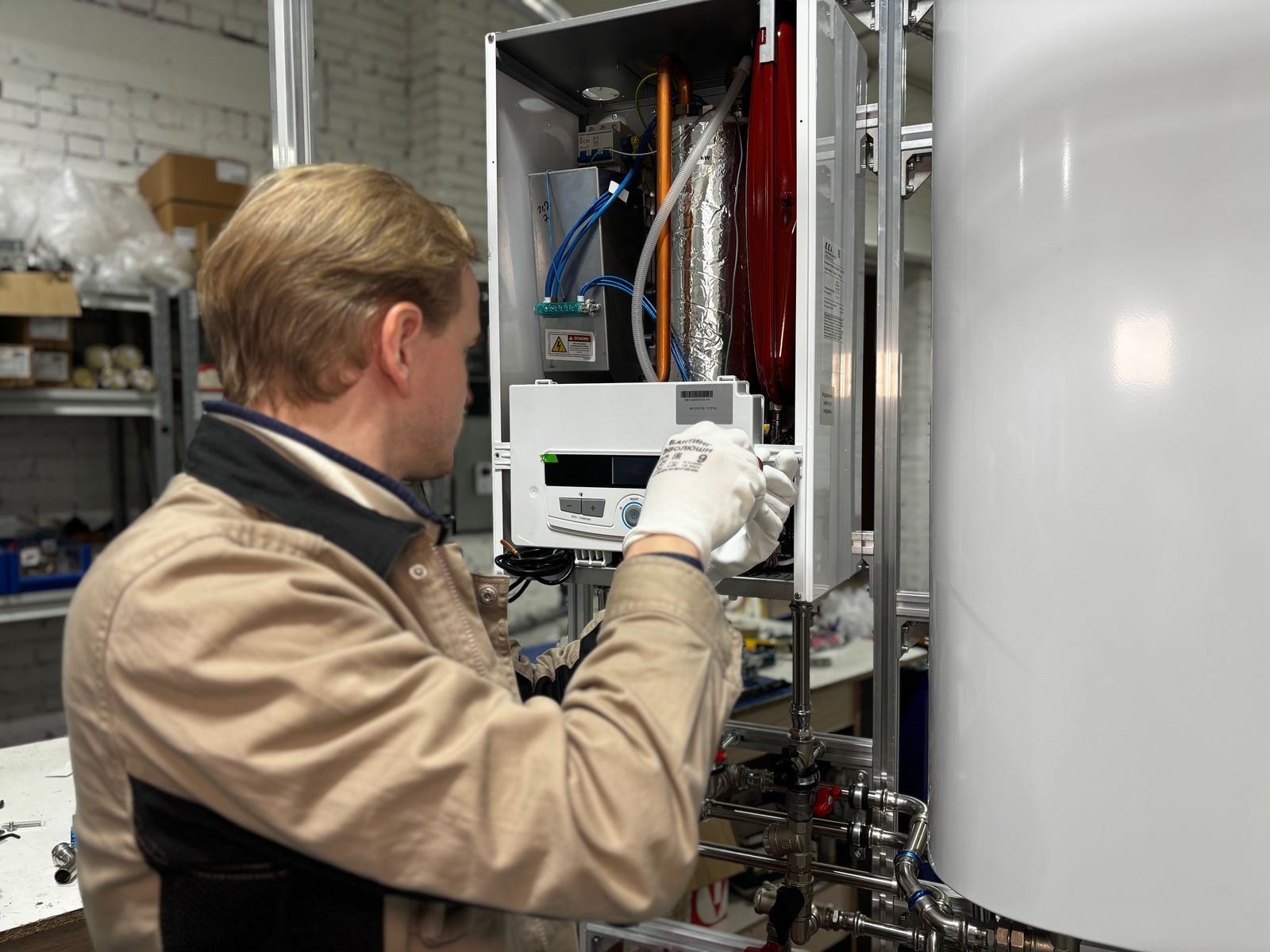
Warning Signs to Watch For
Recognizing the warning signs early can save you money and keep a slow drip from turning into a flooded utility room. These are the red flags our technicians see most often before a breakdown:
- Moisture or mineral crust at the end of the relief valve pipe
- A drain valve at the bottom of the tank that drips even when closed
- Rusty or discolored hot water paired with dampness at the base
- Warped baseboards or stained drywall beside the water heater
- A wet floor near the water heater that keeps coming back
- Mineral buildup or rust around the hot and cold connections
- Moisture or rust flakes under the burner access cover
- A water bill that rises without any change in usage
Act Before It Gets Worse
A worn-out anode rod, a sediment-choked tank, or a weak thermocouple rarely fixes itself, and the repair usually costs more the longer it waits. A quick call to (320) 205-8357 gets a technician out to check it before it becomes an emergency.
Water Heater Trouble? Call Us.
Our experienced technicians are standing by to help.
Call (320) 205-8357 TodayWater Heater Leak Repair FAQ
Why Hire a Professional for Water Heater Leak Repair?
Reading a water heater leak correctly is harder than it looks. A drip that appears to come from the bottom may start at a fitting on top and run down the jacket, and condensation on a cold tank can look exactly like a failure. Replacing the wrong part wastes money, and overlooking a tank that is starting to go can lead to a much bigger flood later. There are safety concerns, too. The relief valve guards the tank against runaway heat and pressure, and blocking it to stop a drip can set up a violent failure. Corroded fittings on an older tank can crack under a wrench, and electric heaters sit on 240-volt circuits that do not mix well with wet floors.
The value of a professional is a confirmed answer. We find the actual source, fix it with the right parts, and look for the reason it failed. When a relief valve drips, we test pressure and expansion. When a fitting is rotten, the connection gets replaced, not cranked tighter. When condensation is the only issue, we explain it and save you a repair. And when the tank itself is leaking, we recommend replacement honestly, with a drain pan, drain line, and leak alarm to limit damage if it ever happens again.
From Your Call to Hot Water
Good water heater work comes down to a consistent routine, and ours starts with a real diagnosis instead of a guess. Here's what you can expect when you choose St. Cloud Water Heater:
Isolate the Leak
Before diagnosing, we isolate the heater, cut the gas or power, and contain any standing water so floors and walls stop soaking it up.
Pinpoint the Leak
With the surfaces dried, fresh water shows us where the leak begins, whether that is a valve, a fitting, condensation on a cold tank, or the steel itself.
Test the Pressure
We gauge household water pressure and look at expansion control, because a closed system without room to expand can force the relief valve open.
Fix and Confirm Dry
Repairs are tested, not assumed. We restore water and heat, check each joint, and suggest a drain pan or leak sensor where it would help. If the tank has failed, you get straight replacement options.
Not Sure What You Need?
Tell us the age, fuel type, and symptoms, and we'll help you sort out the next step.
Call (320) 205-8357 NowSimple Ways to Extend Your Water Heater's Life
A few preventive steps can help you avoid a cold shower or a wet floor down the road. Start with these practical measures our team relies on:
- Ask about expansion control if your home has a check valve or backflow preventer
- Place the heater in a drain pan with a line to a floor drain or outdoors, especially above finished space
- High street pressure is hard on water heaters, so a pressure test and regulator can prevent repeat drips
- A battery leak alarm beside the heater costs little and can catch a problem days sooner
- A quick monthly look at the base, valves, and top connections catches leaks early
- Replace a depleted anode rod before the steel tank becomes the next target for corrosion
- Flush the tank once a year so sediment does not overheat the bottom and speed corrosion
Comparing DIY and Professional Work
Relighting a pilot by following the label is one thing. Diagnosing a gas valve, a burned-out element, a dirty flame sensor, or a tankless error code calls for meters and know-how that a pro brings. Here's a comparison:
| Consideration | DIY Attempt | Hiring a Pro |
|---|---|---|
| Finding the Source | Guess based on where water collects | Every valve and fitting checked in order |
| T&P Valve | Valve capped to stop the drip, a serious hazard | Root cause fixed so the new valve stays dry |
| Corroded Connections | Tightened until the fitting cracks | Corroded connections replaced with new fittings |
| Condensation vs Leak | Normal sweating treated as a leak | Condensation identified before money is spent |
| Protecting the Home | Damage prevention skipped | Protection added where it matters most |
| Outcome | Source unconfirmed | Lasting fix, verified under pressure |
Get Water Heater Leak Repair Help Today
Cold showers and damp floors don't get better on their own. St. Cloud Water Heater can have a technician headed your way soon.
Get Help: (320) 205-8357Where We Provide Water Heater Leak Repair
Our technicians handle water heater leak repair throughout St. Cloud and the surrounding communities, with the same upfront pricing everywhere we work.